
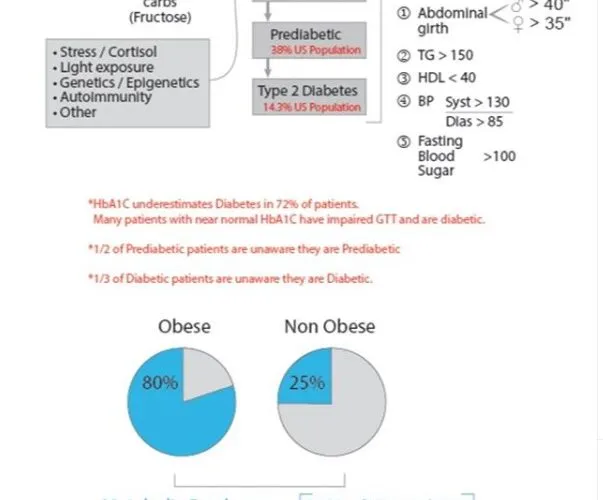
Obesity does not cause metabolic syndrome. Obesity is a marker for it — which is why the syndrome appears in people of entirely normal weight, and why treating the weight without treating the metabolism so often disappoints.
What is happening underneath
During the early phase, the body compensates for insulin resistance by producing more insulin, keeping blood glucose near normal. Nothing looks wrong on a routine panel. That compensation continues until the pancreas and liver overflow with fat driven by the chronically high insulin, at which point the change is abrupt: hyperinsulinemia can no longer keep pace, and glucose finally rises.
By then the process has been running for years. This is the central reason metabolic syndrome is worth identifying early — the damage accrues during the compensated phase, not after the diagnosis.
The cluster
As a cluster, obesity, raised fasting plasma glucose, elevated cholesterol and hypertension comprise the metabolic syndrome. Inflammation is the thread running through all of them: an essential response to infection and injury, which becomes pathological when it fails to resolve. Excessive acute inflammation damages tissue; non-resolving inflammation produces chronic tissue malfunction.
Risk factors
The following increase the likelihood of developing insulin resistance and metabolic inflammation:
- Carrying excess weight, particularly around the abdomen, where extra fat cells drive insulin resistance directly.
- Physical inactivity, which usually travels with the above.
- A close relative with type 2 diabetes.
- Ethnicity, which may act as a genetic factor, a lifestyle factor, or both.
- A diet built on refined carbohydrates, industrial seed oils and ultra-processed food.
Prevention
A healthy pattern prevents the conditions that produce metabolic syndrome, and the components are unglamorous:
- Eat only when genuinely hungry. Do not snack.
- Get at least thirty minutes of physical activity daily.
- Eat real food and avoid processed food.
- Avoid sugars and artificial sweeteners.
- Give your body an interval each day in which insulin is genuinely low.
Why this sits in a pain practice
Pain is the leading reason people arrive at this practice, and it is the common link between untreated metabolic syndrome and untreated diabetes. Several thousand patients a year are evaluated here for chronic pain, in an urban setting with ready access to high-intensity healthcare through several large academic centers and government-sponsored clinics.
Despite that access, population health has continued to deteriorate. The availability of cutting-edge treatment has not compensated for a metabolic environment that nothing in the standard pathway addresses.