You stop insulin on a low-carb diet in steps, with your doctor running the doses. The 2026 guideline from the Society of Metabolic Health Practitioners says the insulin dose comes down the same day the carbs come down. Many adults with type 2 diabetes can then stop once they need less than 10 units a day.
Here is the part most people miss. The danger is not the diet. The danger is the old dose meeting the new plate. Your insulin dose was set for the food you used to eat. Cut the bread, rice and soda, and that same dose now has far less sugar to cover. Blood sugar can fall too far, and it can fall fast.
I know how hard it is to drop a habit you were trained to defend. For years I was a strict vegetarian who taught the official high-carb plate. A bite of beef at Gates Bar-B-Q in Kansas City started to undo that. What replaced it is simple: the plate sets the dose. Change the plate, and the dose has to change with it.
Why does insulin have to drop on the first day?
When carbs fall, your body needs less insulin right away. The guideline says it plainly: when a patient on insulin starts a low-carb diet, doses are generally cut at once to prevent low blood sugar.
Its medication table gives a starting point. Insulin is cut by half on day one. Mealtime insulin is stopped if the person starts a very-low-carb diet. From there the dose is adjusted up or down until blood sugar is steady.
Timing matters most at the start. In the guideline’s words, “The first 2–3 days, when metabolic shifts are large, carry the greatest risk of severe lows.” That is the window when we watch closest and talk most often.
These are the doctor’s moves, not yours. Never change an insulin dose on your own. That goes for every glucose-lowering drug and every blood-pressure pill too.
What do I check at home while the dose comes down?
The guideline asks for two readings every day. Check your blood pressure daily. Check your blood sugar daily, and take some readings one to two hours after a meal.
Why blood pressure? As insulin falls, your kidneys let go of extra salt and water. That lowers blood pressure, sometimes enough that a pill which was right last month is now too strong. Write every number down. A log of real readings is what lets your doctor lower a dose with confidence instead of guessing.
What happens to my other diabetes pills?
Insulin is not the only drug that can push sugar too low. The guideline’s table sorts the common ones:
- Sulfonylureas and meglitinides: stopped right away, because they can drive blood sugar too low once carbs fall.
- SGLT2 inhibitors: stopped or used with caution. Their effect can last up to a week, and ketone checks have a real use here.
- Thiazolidinediones: usually stopped.
- Metformin, DPP-4 inhibitors and GLP-1 drugs: listed as safe to keep.
- Blood-pressure drugs: reviewed at the start, then every two to four weeks, using your home log.
Read that list as a map of the talk you will have with us, not as a to-do list.
When can I stop insulin completely?
The guideline gives a clear line. Adults with type 2 diabetes whose blood sugar is stable can often stop insulin once their dose is under 10 units a day.
There is one check first. A blood test called C-peptide shows how much insulin your own pancreas still makes. If that number is healthy, your body can carry the load. If it is low, stopping insulin is not safe, no matter how good your diet is.
What if my type 2 diabetes is really something else?
Some people told they have type 2 diabetes are really short on insulin. This can be type 1 that showed up late in adult life, often called LADA. Stopping insulin in that case is dangerous. The guideline lists the warning signs to rule out before any insulin comes off:
- You were young when you were diagnosed.
- You needed insulin within five years of diagnosis.
- You still needed insulin after major weight loss or weight-loss surgery.
- Your blood sugar swings widely from reading to reading.
- You were not overweight when diagnosed. The weight cutoffs are lower for people of Asian descent.
- Your triglycerides are normal and your HDL is high.
- You or your family have an autoimmune disease.
- You have had diabetic ketoacidosis (DKA).
- You have had pancreatitis or pancreas surgery.
If any of these fit, tell us. That is when C-peptide stops being a box to check and becomes the deciding test.
What do I eat while insulin comes down?
The guideline defines low-carb as less than 130 grams of carbohydrate a day. Protein is set first, about 25 to 30 grams per meal. The base is meat, fish, eggs, full-fat dairy and vegetables that grow above the ground. Bread, pasta, rice, cereal and sugary fruit come off the plate. Fat is eaten until you are full, and counting calories is generally not needed.
Our own position goes further. In a population that is already metabolically sick, refined grains and industrial seed oils do harm. Red meat and fish are good food for our patients. Real olive oil is fine. Butter and tallow, both named in the guideline, are fine too.
We also measure more than A1C. A fasting insulin above 10 µIU/mL is high risk in our clinic. LP-IR tends to rise before A1C does. A GGT above 20 U/L is our early signal of a fatty liver. These are the practice’s markers, not the guideline’s.
Why is this so hard to do alone?
High insulin keeps fat locked in storage and keeps hunger loud. Insulin resistance then asks for more insulin, and the loop feeds itself. The guideline lists fewer cravings and less appetite among the benefits of cutting carbs, which is how the loop starts to break.
The food around you pushes the other way. A cheap plate of rice, bread and soda is easy to buy on every corner. The insulin to cover it is billed every month for years. That is why we coach the family, not just the patient. A kitchen that changes together is a kitchen that stays changed.
One honest note on the guideline itself. It is an expert consensus, not a clinical trial. Twenty-six people voted on its 18 statements, and its first author is a paid consultant to the society. Its insulin advice matches what we see in practice, and we use it that way.
What should I do next?
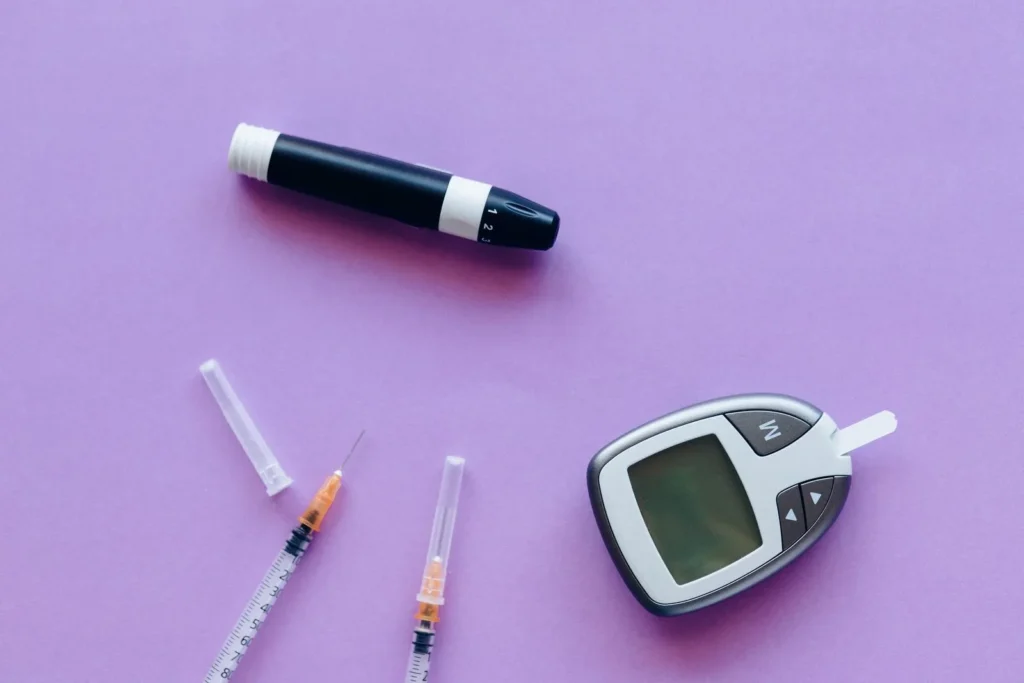
Do not start by cutting insulin. Start by getting a plan. Bring your meter, your pill bottles and your last lab results to a visit. We will check C-peptide, set your day-one doses, and give you a log to fill in. Then we lower the dose as your numbers earn it. To learn why extra insulin feeds the problem in the first place, read our page on insulin for type 2 diabetes.
Waiting costs you more years on a drug that keeps the loop running. Acting in steps protects you from the one real danger, a low you did not see coming. When you are ready, book a visit.
Frequently asked questions
Do I need a continuous glucose monitor?
Not to do this safely. The guideline cites a study that found a continuous monitor worked no better than finger-stick checks. A plain meter and a written log are enough, so cost does not have to stand in the way.
Will a low-carb diet give me ketoacidosis?
The ketosis from eating low-carb is a normal state. It also happens after an overnight fast. It is not diabetic ketoacidosis, and the levels do not come close. People who take SGLT2 inhibitor drugs are the exception that needs care, which is why the guideline gives ketone checks a real use for them.
How can I naturally control insulin resistance?
Lower the thing that drives insulin up: carbohydrate. The guideline credits low-carb eating with better blood sugar even without major weight loss, and with possible remission of prediabetes and type 2 diabetes. Learn more on our page about what insulin resistance is.
Sources
- Rice SM, Buchanan LA, Calkins MW, Cucuzzella MT, Cywes R, Devine PL, Kalamian M, Kalayjian T, Reynolds DB, Westman EC. A Delphi consensus-based guideline for the implementation of therapeutic carbohydrate reduction in metabolic disorders. Journal of Metabolic Health. 2026;9(1):a152. doi:10.4102/jmh.v9i1.152
Medically reviewed by Dr. Gurpreet Singh Padda, MD, MBA, MHP
Interventional pain physician, addiction medicine specialist and obesity medicine diplomate.
Licensed in Missouri and Illinois.
Last reviewed October 4, 2026