Fatty liver often starts in the gut, not in the liver. Everything your bowel absorbs flows first to the liver through one vein, and a leaky gut wall, bacteria that turn sugar into fat-building fuel, and small amounts of gut-made alcohol all reach it before the rest of your body does.
For years I told patients with prediabetes that their A1C was “not too bad.” I checked their liver enzymes, saw numbers inside the range, and moved on. I was reading the wrong end of the pipe. By the time insulin resistance shows up on a lab report, the liver has usually been taking deliveries from the gut for years.
The video above covers Chapter 5 of The Angry Gut, “The Fatty Liver Furnace,” which Ami Michelle Grimes and I wrote for the book released September 28, 2026. Here is the part that matters if you are reversing prediabetes or type 2 diabetes: if the gut feeds the liver, what changes about the plan?
Can fatty liver start in the gut?
A single layer of cells lines your intestine, renewed every few days. That layer is all that separates a bowel full of bacteria from the portal vein, which drains straight to your liver. When it loosens, bacterial fragments ride in with your dinner.
In 35 adults with biopsy-proven fatty liver, the bowel wall leaked more than it did in 24 healthy volunteers, and bacterial overgrowth in the small bowel was more common. The leak rose with the amount of fat in the liver.1
A 2024 study looked at people with type 2 diabetes. Fluid from the stool of those with liver scarring cut the electrical resistance of a lab-grown sheet of gut cells to 185 units, against 258 in the comparison group, and the loss tracked liver stiffness at a correlation of -0.88.2 Twelve people’s samples: a strong signal, not the last word.
How does sugar become liver fat by way of the gut?
Researchers deleted, in mice, the liver enzyme believed to supply the raw material for making fat from fructose. Fructose still built fat. Gut bacteria were converting fructose into acetate, and the liver was making fat out of the acetate.3
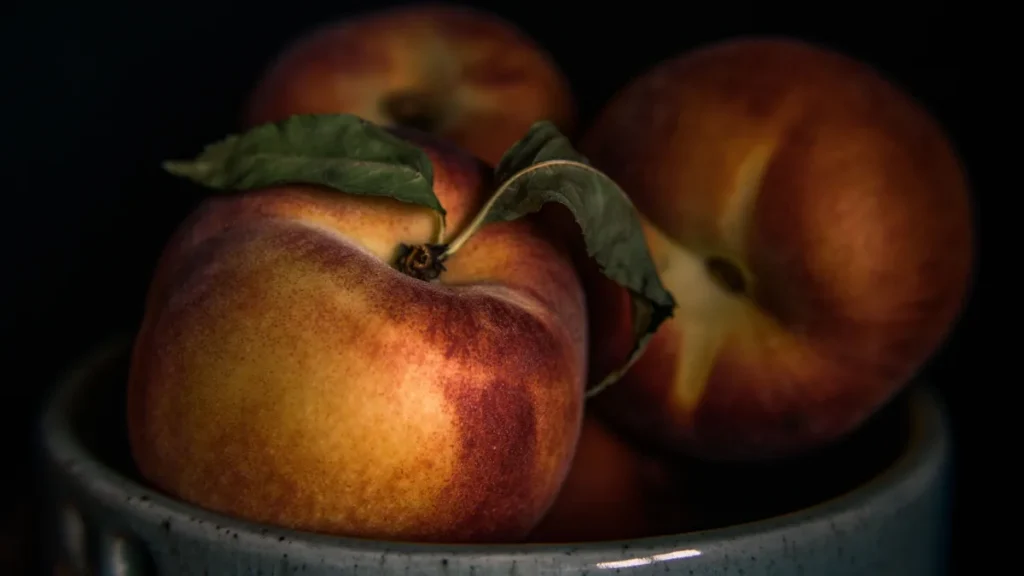
Speed chose the route. When fructose arrived slowly, the small bowel took up much of it. A sudden load pushed it past the small bowel and down to the bacteria.3 That is animal work, yet the kitchen version is simple: the sugar in a peach and the sugar in a bottle of soda do not travel the same road. (Why fructose differs from glucose is covered here.)
This is where the food system walks into your liver. Sugar sold as a drink is cheap, shelf-stable and gone in minutes: exactly the delivery that reaches the bacteria. Nobody picked that format for your liver. It was picked for the margin.
Can your gut make alcohol if you never drink?
A little, and everyone’s does. In a study of 1,557 people, ordinary blood alcohol ran 0.01 to 0.09 mg/dL, about a thousandth of the legal driving limit. In cirrhosis and diabetes it rose to about 4.85 mg/dL.4 Far below anything you would feel, but it reaches the liver first.
What you feed the gut decides how much it brews. Stool from patients with auto-brewery syndrome, grown on simple sugars, produced up to 35 mmol/L of alcohol. Given other foods, the same bacteria stayed below 10.5
Insulin resistance also appears to slow the cleanup. In children with fatty liver, fasting blood alcohol was higher than in children without it and climbed with insulin resistance, even though diet and bacterial overgrowth were the same in both groups.6
Is insulin resistance the cause of fatty liver or the result?
Both, which is why it is so hard to break. Insulin resistance changes how the liver handles what the gut sends. A liver loaded with fat and bacterial alarm signals then joins the inflammatory crosstalk that keeps insulin resistance going, the loop described in metabolic inflammation as a cause of insulin resistance.
Waist size and weight matter in that loop, and we measure them. But body fat and a leaking bowel are not rival explanations. They are the same terrain seen from two rooms.
Why do my liver tests look normal?
Two blind spots. An ordinary ultrasound cannot see liver fat until it fills more than 30% of liver cells, so early disease looks normal on the scan.7 And blood drawn from your arm has already been through the liver’s filter.
One enzyme on your panel, GGT, follows the fat more closely than most people are told. In a nationwide Korean cohort, 1.6% of people in the lowest third of GGT had a high fatty liver index, against 47.7% in the highest third.8 In a Korean national database of people who already have diabetes, which recorded 222,242 deaths over a median of 8.1 years, the top quarter of GGT carried 1.57 times the risk of death from any cause compared with the bottom quarter.9 A GGT creeping upward inside the normal range deserves a question.
Will a probiotic fix fatty liver?
Not on the evidence so far. In the largest trial of its kind, 104 patients took a synbiotic or a placebo. On the synbiotic, liver fat dropped from 32.3% to 28.5%. On placebo it dropped further, from 31.3% to 25.2%. Only weight loss explained the change.10 Two small randomized trials of stool transplants, with 21 and 20 patients, shifted the gut community and left liver fat where it was.11,12
That does not make the gut the wrong target. It makes a capsule a poor way to hit it. The lever is what you send down the pipe, and when.
What does this mean for reversing insulin resistance?
It moves the work upstream, to the table:
- Keep sugar inside its food. Fructose in whole fruit arrives slowly. Fructose in a drink arrives as a flood that reaches the bacteria. Liquid sugar goes first.
- Eat on a rhythm. Gut bacteria keep time with your meals. When that rhythm broke, the disordered community made germ-free mice glucose intolerant and obese.13 A steady daily eating window is part of the treatment; see you are already intermittent fasting.
- Ask about choline. In a supervised study, some healthy women developed fatty liver on a low-choline diet, and it resolved when choline came back. Typical American intake sits near half the recommended amount, a median of 284 mg a day against 550 mg.14 That is a diet conversation with your physician, not a supplement to buy.
- Track the trend. Collect every GGT result you have ever had. Five readings over ten years tell you more than one.
If you take glucose-lowering medication, make these changes with your prescriber involved. A dose that was right can become too strong as insulin sensitivity returns.
Doing nothing costs you a liver that keeps taking deliveries a standard panel cannot see while your A1C drifts. Acting protects the organ that stands between your gut and everything downstream of it.
Reverse Diabetes MD sees patients at 4477 Woodson Rd, Suite 209, St. Louis, MO 63134. The chapter’s free technical supplement is at theangrygut.com, and the practice’s approach is on the type 2 diabetes page.
Frequently asked questions
What is MASLD, and is it the same as fatty liver?
MASLD, metabolic dysfunction-associated steatotic liver disease, is the current name for what used to be called nonalcoholic fatty liver disease. The definition needs two things: fat in the liver and at least one of five heart-and-metabolic risk factors. The name was set by 236 panelists from 56 countries.15
Should I get a leaky gut test?
Be careful with zonulin. When researchers checked the common commercial zonulin kit in 376 people, it did not detect the protein it claims to measure.16 Ask any gut test which molecule it detects, and what it was validated against.
Does “nonalcoholic” mean alcohol plays no part?
No. Gut-made alcohol reaches the liver in people who never drink. And in 122 people who had liver biopsies, drinking below the level that defines alcohol-related disease was tied to the same bacterial bile acid shift seen in fatty liver.17
Sources
- Miele L, et al. Increased intestinal permeability and tight junction alterations in nonalcoholic fatty liver disease. Hepatology. 2009;49(6):1877-1887. doi:10.1002/hep.22848
- Forlano R, et al. Disruption of gut barrier integrity and host-microbiome interactions underlie MASLD severity in patients with type-2 diabetes mellitus. Gut Microbes. 2024;16(1):2304157. doi:10.1080/19490976.2024.2304157
- Zhao S, et al. Dietary fructose feeds hepatic lipogenesis via microbiota-derived acetate. Nature. 2020;579(7800):586-591. doi:10.1038/s41586-020-2101-7
- Stamation R. Endogenous ethanol production in the human alimentary tract: A literature review. Journal of Gastroenterology and Hepatology. 2025;40(4):783-790. doi:10.1111/jgh.16869
- Xue G, et al. Three Klebsiella species as potential pathobionts generating endogenous ethanol in a clinical cohort of patients with auto-brewery syndrome: A case control study. EBioMedicine. 2023;91:104560. doi:10.1016/j.ebiom.2023.104560
- Engstler AJ, et al. Insulin resistance alters hepatic ethanol metabolism: Studies in mice and children with non-alcoholic fatty liver disease. Gut. 2016;65(9):1564-1571. doi:10.1136/gutjnl-2014-308379
- Newsome PN, et al. Guidelines on the management of abnormal liver blood tests. Gut. 2018;67(1):6-19. doi:10.1136/gutjnl-2017-314924
- Cho EJ, et al. Gamma-glutamyl transferase and risk of all-cause and disease-specific mortality: a nationwide cohort study. Scientific Reports. 2023;13(1):1751. doi:10.1038/s41598-022-25970-0
- Chung GE, et al. Gamma-glutamyl transferase and the risk of all-cause and disease-specific mortality in patients with diabetes: A nationwide cohort study. Journal of Diabetes. 2024;16(5):e13551. doi:10.1111/1753-0407.13551
- Scorletti E, et al. Synbiotics alter fecal microbiomes, but not liver fat or fibrosis, in a randomized trial of patients with nonalcoholic fatty liver disease. Gastroenterology. 2020;158(6):1597-1610.e7. doi:10.1053/j.gastro.2020.01.031
- Craven L, et al. Allogenic fecal microbiota transplantation in patients with nonalcoholic fatty liver disease improves abnormal small intestinal permeability: A randomized control trial. American Journal of Gastroenterology. 2020;115(7):1055-1065. doi:10.14309/ajg.0000000000000661
- Groenewegen B, et al. Consecutive fecal microbiota transplantation for metabolic dysfunction-associated steatotic liver disease: A randomized controlled trial. Gut Microbes. 2025;17(1):2541035. doi:10.1080/19490976.2025.2541035
- Thaiss CA, et al. Transkingdom control of microbiota diurnal oscillations promotes metabolic homeostasis. Cell. 2014;159(3):514-529. doi:10.1016/j.cell.2014.09.048
- Spencer MD, et al. Association between composition of the human gastrointestinal microbiome and development of fatty liver with choline deficiency. Gastroenterology. 2011;140(3):976-986. doi:10.1053/j.gastro.2010.11.049
- Rinella ME, et al. A multisociety Delphi consensus statement on new fatty liver disease nomenclature. Hepatology. 2023;78(6):1966-1986. doi:10.1097/HEP.0000000000000520
- Scheffler L, et al. Widely used commercial ELISA does not detect precursor of haptoglobin2, but recognizes properdin as a potential second member of the zonulin family. Frontiers in Endocrinology. 2018;9:22. doi:10.3389/fendo.2018.00022
- Adams LA, et al. Bile acids associate with specific gut microbiota, low-level alcohol consumption and liver fibrosis in patients with non-alcoholic fatty liver disease. Liver International. 2020;40(6):1356-1365. doi:10.1111/liv.14453
- Padda GS, and Grimes AM. The Angry Gut: The First Brain: Older Than Thought, and Still in Charge. Chapter 5, “The Fatty Liver Furnace,” and its technical supplement. Nectar Media Group; 2026.
Medically reviewed by Dr. Gurpreet Singh Padda, MD, MBA, MHP
Interventional pain physician, addiction medicine specialist and obesity medicine diplomate.
Licensed in Missouri and Illinois.
Last reviewed September 28, 2026