
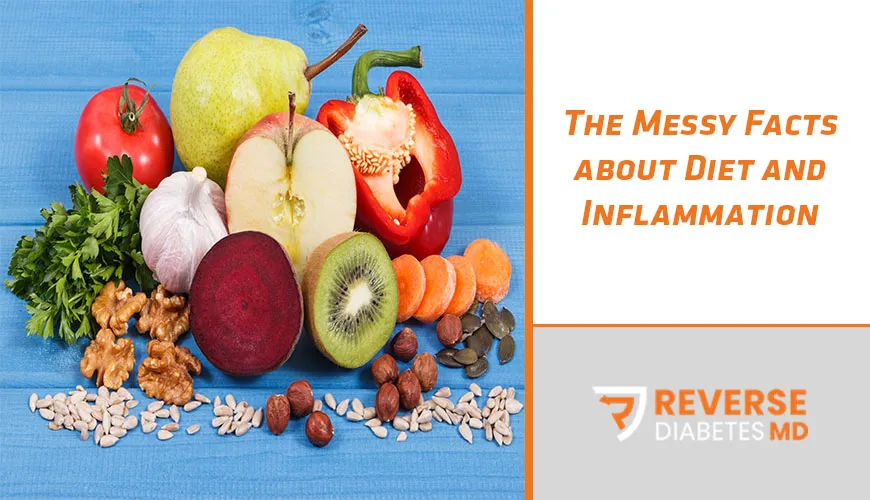
Can certain foods really help you fight heart disease, arthritis, and dementia?
No single food has been proven anti-inflammatory in people. Much of that evidence comes from lab experiments. What well-designed studies do show is that a Mediterranean-type diet lowers key markers of inflammation and the risk of heart disease. That diet is heavy on vegetables, whole grains and fish, and light on red meat and processed foods. For our patients, we keep the vegetables and fish, add red meat, and leave out refined grains and seed oils.
In health, as in so many things, our greatest strength can be our greatest weakness. Take our amazingly sophisticated response to injury and infection. Our bodies unleash armies of cell troops to slaughter invaders and clear out traitors. Signaling chemicals, such as the interleukins, direct their movements. They tell cells where and when to fight, and when to stand down. We feel this as the swelling, redness, and soreness of inflammation. It is an essential part of healing.
But sometimes the wars fail to wind down. Inflammation can become chronic (long-lasting) or systemic (body-wide). Then there’s hell to pay. I’m looking at you, arthritis, colitis and bursitis. And at you, diabetes, colon cancer, Alzheimer’s and cardiovascular disease.
Cardiovascular disease is the world’s biggest killer. We’ve known for 20 years that inflammation (along with too much cholesterol) ignites the buildup of plaque in our arteries. Still, no one knew if runaway inflammation could actually pull the trigger on heart attacks and strokes. Then, this summer, a large, well-designed trial reported its results. It showed that certain high-risk patients suffered fewer of these “events” (as doctors so mildly call them) when they got a drug that precisely targets inflammation (aiming at interleukin 1). It was sweet vindication for Paul Ridker of Harvard University. He is a cardiologist and was the principal investigator of the trial. He also directs the Center for Cardiovascular Disease Prevention at Brigham and Women’s Hospital. He had long argued that inflammation was as vital a target as cholesterol.
The patients in Ridker’s study had already had a heart attack. They also had persistent inflammation (as measured by blood levels of C-reactive protein). But it is tempting to draw lessons for all of us. Chronic inflammation plays a nefarious (harmful) role in heart disease and many other disorders. So shouldn’t we all do what we can to keep it in check? And I’m not talking about taking drugs like ibuprofen, which ease short-term inflammation. I mean something we can do every day of our lives: eat right.
Hop on the Internet or visit a bookstore, and you will see “anti-inflammatory” diets galore. They dish out recipes and hope. Many aim at specific ailments, such as arthritis, breast cancer, heart disease and various autoimmune disorders. Health guru Andrew Weil goes so far as to offer an “Anti-Inflammatory Food Pyramid.”
The science underneath, however, is somewhat shaky. Sure, plenty of foods have been found to reduce inflammation. But many of them were tested in lab experiments, not in people: turmeric, blueberries, ginger, tea, various vegetables, dark chocolate, fish. University of South Carolina epidemiologists James Hébert and Nitin Shivappa bravely surveyed 1,943 such studies. In 2014 they published a Dietary Inflammatory Index, with 45 food elements. They created it as a research tool for judging diets. But they concede it’s built from studies whose methods varied widely.
When I asked Ridker his views on anti-inflammatory diets, he grew uneasy. “This has caught on like wildfire,” he says, “but I have seen extremely little data that say this piece of food is ‘anti-inflammatory’ and this piece is ‘pro-inflammatory.’” He advises his own patients to eat a Mediterranean-type diet. That means heavy on vegetables, whole grains and fish, and light on red meat and processed foods.
Cardiologists have long endorsed that diet. Well-designed studies have shown it reduces key markers of inflammation and the risk of heart disease. Would it work even better with more blueberries and turmeric? No one knows for sure.
Such ingredients may work anti-inflammatory wonders for mice. But “that’s in the context of rodent chow with a whole different set of macro and micronutrients,” explains Martha Clare Morris. She is a nutritional epidemiologist at Chicago’s Rush University. And context matters. The typical Mediterranean diet calls for loads of seafood a week. Yet studies of people taking fish oils as a supplement have not found many benefits. The virtues of fish may lie elsewhere. Or they may have more to do with displacing meat.
That’s why researchers such as Morris prefer to study overall dietary patterns rather than single ingredients. Her current project examines whether cognitive decline (loss of thinking skills) can be slowed with a regimen called the MIND diet. The MIND diet combines parts of the Mediterranean diet with another well-studied diet called DASH. The project will look at inflammation, but results won’t be out before 2021.
Until then, there is no harm in adding more so-called anti-inflammatory ingredients to your diet. Hébert suggests a spicy chai (loaded with ginger, turmeric, and pepper). But remember the context! So don’t drink it with cookies and chips.
Related reading
Medically reviewed by Dr. Gurpreet Singh Padda, MD, MBA, MHP
Interventional pain physician, addiction medicine specialist and obesity medicine diplomate.
Licensed in Missouri and Illinois.
Last reviewed June 18, 2026




