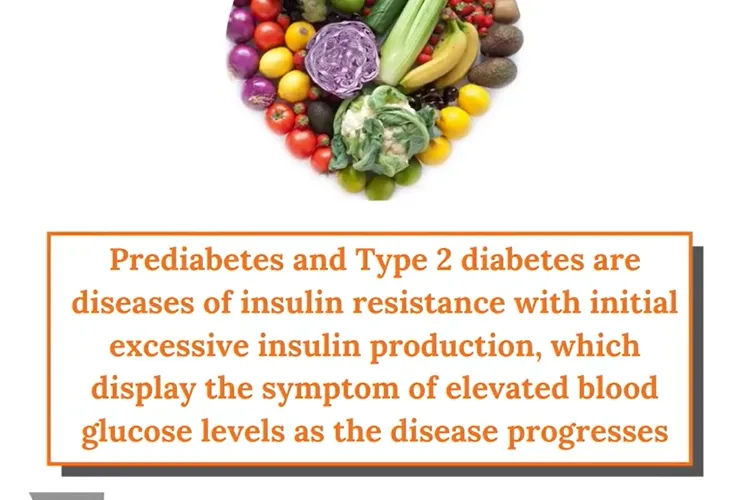
Prediabetes is a pre-diagnosis — a warning, not a disease in waiting. It is also reversible. The mistake built into standard practice is treating the diagnostic line as the point where harm begins.
When does prediabetes start causing damage?
Most doctors wait until HbA1c is above 6.5 before they act. But macrovascular damage (damage to the large blood vessels) is already happening between 5.7 and 6.5. The higher cardiovascular risk associated with type 2 diabetes does not start at the diagnostic cutoff. Microvascular and macrovascular (small and large blood vessel) risk runs along a continuum that extends well below it. (Hopper I, Billah B, Skiba M, Krum H. Prevention of diabetes and reduction in major cardiovascular events in studies of subjects with prediabetes: a meta-analysis of randomized controlled trials.)
It is also worth knowing that HbA1c has a significant tendency to miss cases compared with an oral glucose tolerance test. A normal HbA1c is weaker comfort than most patients are led to believe.
How common is prediabetes, and does it have symptoms?
In 2015 an estimated 84.1 million American adults had prediabetes — roughly one in three. Most did not know. Diabetes develops slowly, over years. During the prediabetic phase there may be no symptoms at all.
What people sometimes notice:
- Eating a standard American processed-food diet.
- Being hungrier than usual.
- Losing weight despite eating more, or gaining despite eating less.
- Increased thirst.
- Passing urine more frequently.
- Unusual fatigue.
What does an HbA1c test measure?
Glycation is a chemical reaction that happens on its own — a Maillard reaction. In it, a sugar molecule bonds tightly (covalently) to a protein or fat with no enzyme controlling it. It is random, and it harms the function of whatever it changes. Notably, fructose has roughly ten times the glycation activity of glucose. That is why the source of the sugar matters, not only the amount.
HbA1c measures the share of hemoglobin that has been glycated. That is why it reflects an average over the life of the red blood cell, not a single moment.
The economics of treating early
Delaying the move to type 2 diabetes is cost-effective even when it takes medication. Generic metformin costs well under five cents per 1,000 mg tablet — roughly six dollars for a thirty-day supply. Compare that with the later cost of insulin once beta-cell fatigue sets in (when the insulin-making cells tire out).
Metformin also has effects beyond glucose. In the prediabetic range it appears to protect the heart. Here is why. Insulin resistance is implicated in the development of left ventricular hypertrophy (a thickened main pumping chamber of the heart). That is one of the strongest independent predictors of cardiovascular outcome. Dysglycemia (abnormal blood sugar) is also common in patients with coronary artery disease. It is linked to insulin resistance.
How many carbohydrates do you actually need?
A patient once asked how many carbohydrates she should eat each day. She asked because her dietitian had told her to eat at least 250 grams or risk brain injury from hypoglycemia (low blood sugar). The USDA, the Institute of Medicine and the American Heart Association recommend that carbohydrates make up 45 to 65 percent of daily calories. On 2,000 calories, that is roughly 900 to 1,300 calories from carbohydrate.
Strictly speaking, the human need for dietary carbohydrate is zero. The body makes the glucose it needs through gluconeogenesis. That is not an argument for cutting out all carbohydrate. But it is a reason to treat the recommended range as a convention, not a body requirement.
Can prediabetes be reversed?
Obesity, prediabetes and type 2 diabetes are associated with most of the diseases of modern society. These include cardiovascular disease, cerebrovascular disease (disease of the brain’s blood vessels), cancer, and Alzheimer’s disease. All are metabolic dysfunctions tied to the malnutrition of overconsumption. That produces metabolic inflammation.
Reversing diabetes while it is still prediabetes is safe, cost-effective and disease-modifying. The best way to reverse diabetes is not to develop it. That is because the risk of heart disease, cancer and death is already raised in the prediabetic range. Treating the root cause rather than the symptom is the whole approach. Cutting out refined carbohydrates is where it starts.
Frequently asked questions
What happens if you are prediabetic?
Harm is already under way. Macrovascular damage (damage to the large blood vessels) happens at an HbA1c between 5.7 and 6.5, long before the diagnostic cutoff for type 2 diabetes. The risk of heart disease, cancer and death is already raised. Most people feel nothing. Roughly one in three American adults had prediabetes in 2015, and most did not know it.
What is the main cause of prediabetes?
Prediabetes is a metabolic dysfunction driven by the malnutrition of overconsumption. That means a diet heavy in refined carbohydrates and sugar, which produces metabolic inflammation. The source of the sugar matters, not only the amount. Fructose has roughly ten times the glycation activity of glucose. So it glycates (sugar-coats) proteins and fats far more readily.
What are the worst foods for prediabetes?
Refined carbohydrates come first, and cutting them out is where reversal starts. The standard American processed-food diet is the usual driver. Foods heavy in fructose deserve special caution, because fructose glycates proteins about ten times faster than glucose. Carbohydrate is not a body requirement. The body makes the glucose it needs through gluconeogenesis.
What is the fastest way to fix prediabetes?
Treat the root cause instead of waiting for an HbA1c of 6.5. Cutting out refined carbohydrates is where it starts. When medication is needed to delay progression, generic metformin costs roughly six dollars for a thirty-day supply. It also appears to protect the heart in the prediabetic range. Reversing it now is safe, cost-effective and disease-modifying.
Related reading
Sources
- Tabák AG, Herder C, Rathmann W, et al. Prediabetes: a high-risk state for diabetes development. Lancet. 2012. PMID 22683128
- Knowler WC, Barrett-Connor E, Fowler SE, et al. Reduction in the incidence of type 2 diabetes with lifestyle intervention or metformin. New England Journal of Medicine. 2002. PMID 11832527
- Tabák AG, Jokela M, Akbaraly TN, et al. Trajectories of glycaemia, insulin sensitivity, and insulin secretion before diagnosis of type 2 diabetes: an analysis from the Whitehall II study. Lancet. 2009. PMID 19515410
Medically reviewed by Dr. Gurpreet Singh Padda, MD, MBA, MHP
Interventional pain physician, addiction medicine specialist and obesity medicine diplomate.
Licensed in Missouri and Illinois.
Last reviewed August 25, 2026